
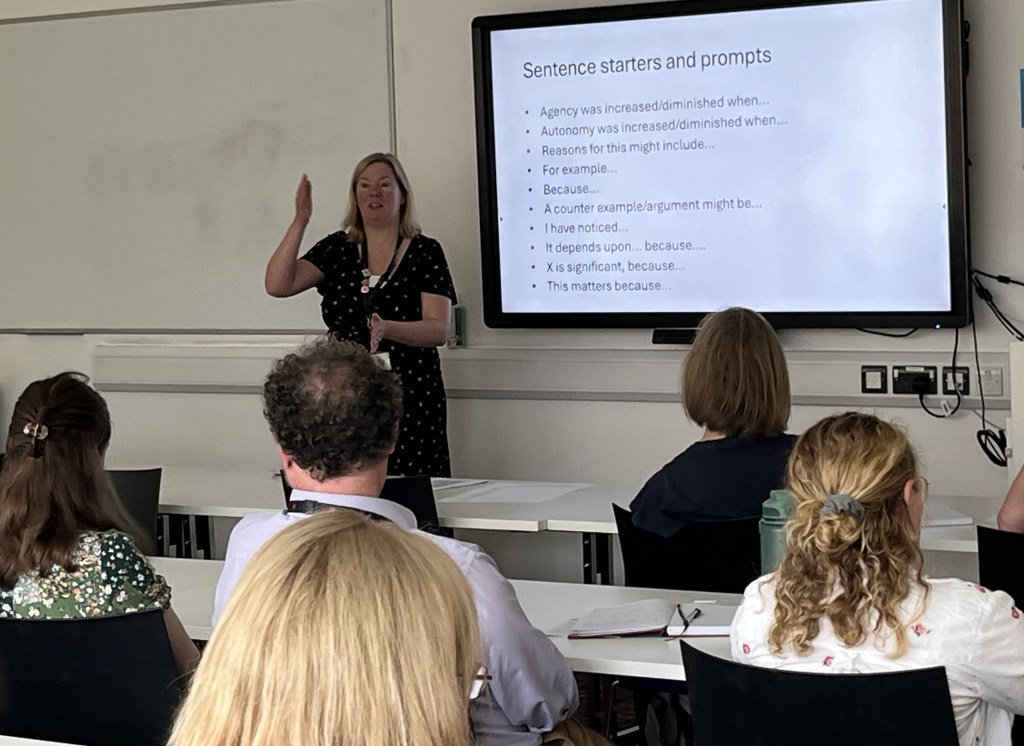
I recently delivered a session for ASTRA Teaching School Hub at Buckinghamshire New University on the topic of oracy. My session was aimed at Teachers who have just completed or are just about to begin their Initial Teacher Training. When I was initially invited to deliver the session, I struggled to find a ‘hook’ to frame my training on oracy around. What would the substance of my session be? I prepared a workshop on the barriers to Continued Professional Development, how to spot them and, basically, how to cut through the noise to the heart of what you need to know in order to incorporate a pedagogical intervention into your practice.
These barriers (codified in McChesney and Aldridge’s excellent 2019 paper) include:
Structural barriers – being present at the CPD. It seems rather odd and obvious to point out that a barrier to CPD is not being present at the session, but this is a real issue for part time workers and such an important consideration as the demand for flexible working is – rightly, and urgently – addressed. My post on flexible working describes how work-life balance challenges is a significant push factor in teachers leaving the profession (https://culture-insight.com/2023/10/01/i-appreciate-the-irony/)
Acceptance barriers – Credibility. Where has the idea come from? Is there good quality research to support it? Do the audience trust that the speaker knows their stuff?
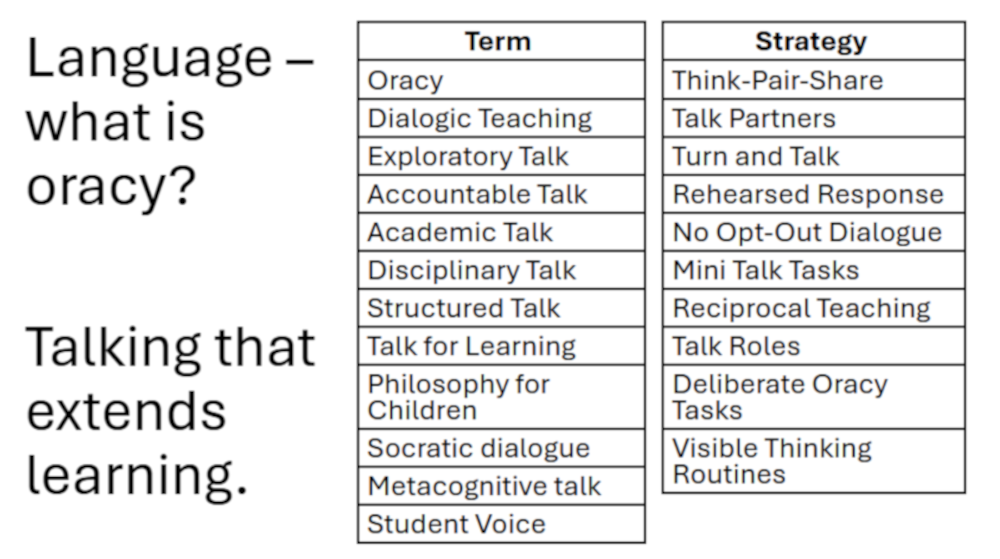
Acceptance barriers – Language. I have spend more time than is healthy combing through academic literature and trying to identify equivocal language. Nuanced language is important to convey meaning, but it can also obfuscate and confuse matters. A quick search revealed a plethora of terminology associated with oracy. If you’ve ever sat in a CPD session and thought ‘didn’t this used to be called x 10 years ago?’ then you’ve experienced a language-based acceptance barrier to your professional learning.
Acceptance barriers – Coherence. Does the intervention make sense? Have you been provided with opportunities to develop deep knowledge and understanding of why something works? Or have you just been told to do it because it is ‘non-negotiable’ (yuk!)?
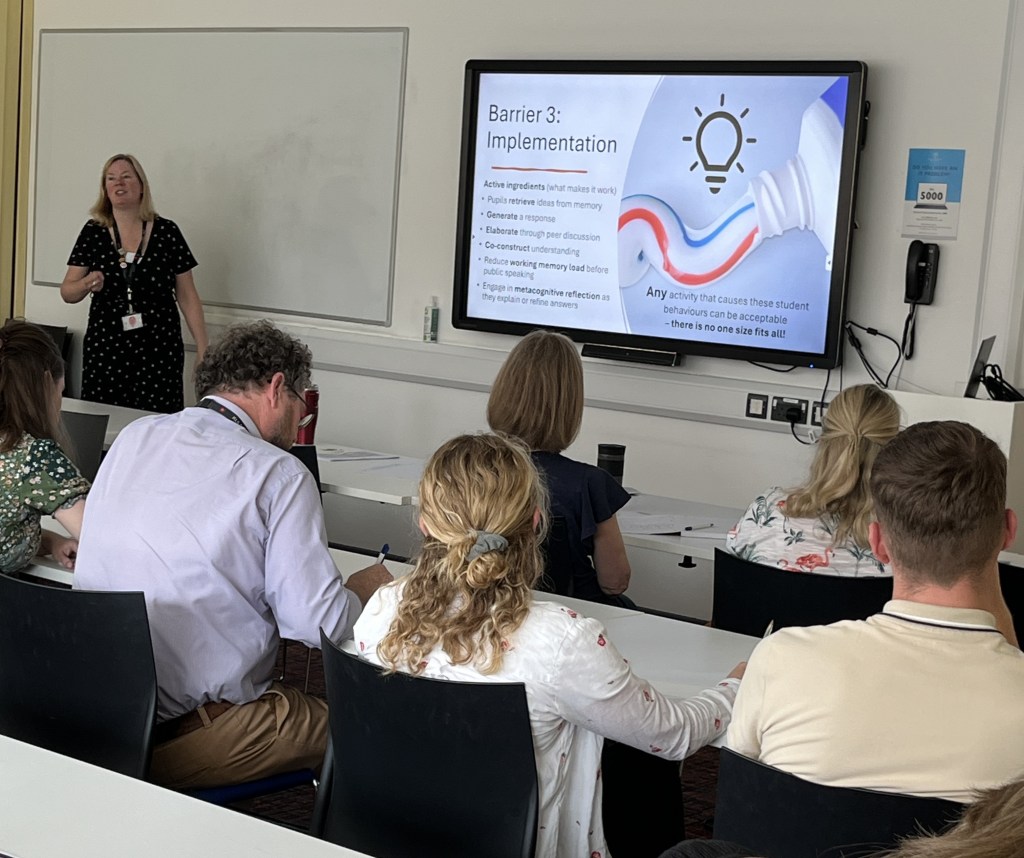
For oracy, these are some of the things to consider: Does the activity support students to…
- Engage in metacognitive reflection as they explain or refine answers?
- Retrieve ideas from memory?
- Generate a response?
- Elaborate through peer discussion?
- Co-construct understanding?
- Reduce working memory load before public speaking?
I would frame these as principles not rules; I think teachers need to understand what their aiming for as well as how to support it with strategies.
Acceptance barriers – Choice. How much choice do people feel they have in how/when they deliver the strategy? To what extent do people feel that they can adapt it for their subject or context. Are there opportunities to process the training and consider how it might work here?
Implementation barriers – Planning and the practicalities of using the strategy in lessons. Modelling, demonstrations and opportunities to practice are key here! This is why it is so important that those planning professional development take the time to really understand what teachers’ experiences are ‘at the chalk face’ and meet the actual needs of the people in that school setting before swooping in with the ‘next big thing’.
Student impact barriers – e.g., challenging behaviour. Teachers find it incredibly insulting and destressing if they are told they must implement some strategy or other when behaviour is not under control in the school, or if the students are hungry, or SEND needs are unmet and under-resourced.
Putting it all together
I framed all this through a discussion about professional agency and autonomy which I liberally peppered with oracy techniques. I explicitly unpacked and modelled these as I went. Throughout the session, I invited the participants to reflect on these strategies and plan to apply them in their contexts.
Was all this too much? Was my whistle-stop tour of why CPD can fall flat inappropriate for new teachers? I don’t think so. Knowledge of the system empowers teachers and prevents them from internalising poor CPD experiences.
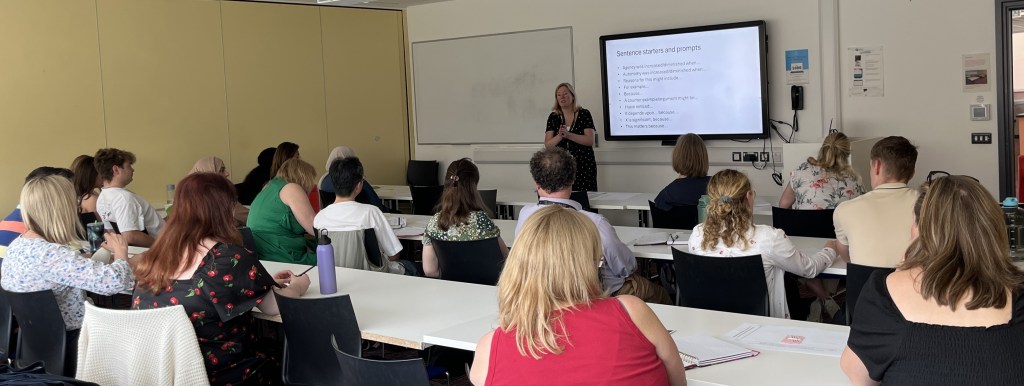
Session feedback:
- Excellent preparation – lots of helpful info packed into a very short amount of time!
- The session was very useful and thought provoking.
- Will be looking to incorporate learnings in my planning and teaching.
- The speaker provided lots of ideas and strategies for using oracy in the classroom.
- The session was well informed, energetic, fun and interactive and I learnt a huge amount.
- I felt really inspired and like I learnt something I could use in classes.
- Really enjoyed Kathryn’s talk.
References:
McChesney, K. and Aldridge, J. M. (2019). ‘What Gets in the Way? A New Conceptual Model for the Trajectory from Teacher Professional Development to Impact’. Professional Development in Education, 0 (0), pp. 1–19. doi: 10.1080/19415257.2019.1667412.
 Exploring culture and professional learning
Leave a comment